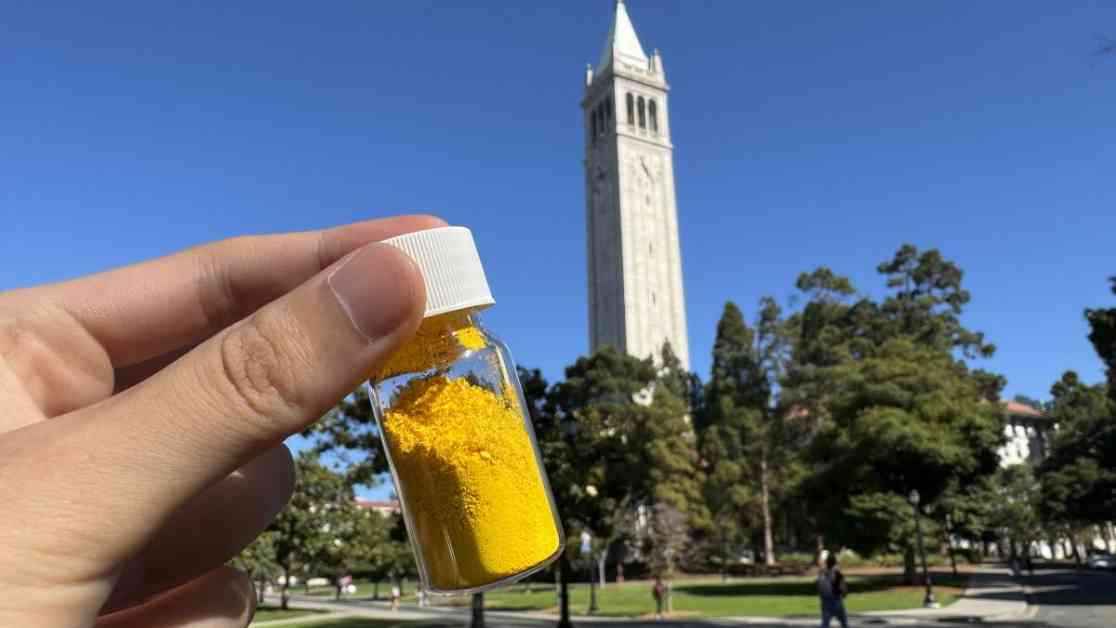
Scientists at UC Berkeley have developed a fluffy yellow powder called COF-999 that can remove carbon dioxide from the air. This powder is designed to trap the greenhouse gas in its microscopic pores and release it when needed. According to a study published in the journal Nature, the powder can perform this task effectively for over 100 cycles and potentially thousands more.
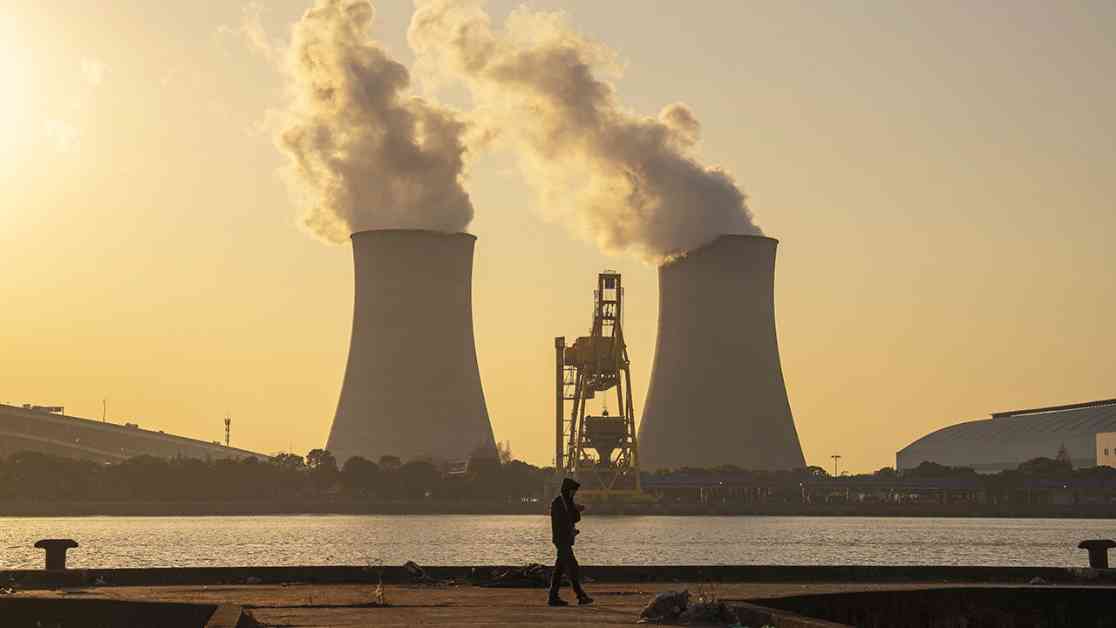
The importance of reducing atmospheric carbon dioxide levels is crucial to limit global warming and prevent the most severe consequences of climate change. Currently, CO2 levels are around 423 parts per million, and it is essential to keep them below 450 parts per million. Direct air capture, like the one using COF-999, is seen as a significant tool in achieving this goal.
The unique structure of COF-999, resembling tiny basketballs with billions of holes, allows it to capture carbon dioxide at a rate at least 10 times faster than other materials. The powder can be heated to release the captured CO2, making the process more efficient and durable. Researchers have tested a newer version that worked for 300 cycles, indicating its potential for thousands more cycles.
To deploy COF-999 on an industrial scale, large metal boxes that allow air to flow through without dispersing the powder would be needed. UC Berkeley scientists estimate that a version of COF-999 suitable for direct air capture plants could be ready within two years. While the cost of producing the powder in bulk is not yet determined, it is noted that the material does not require expensive or exotic components.
Commercializing this technology is an essential step in making a real impact on reducing carbon dioxide levels in the atmosphere. Initiatives like Atoco, founded by Omar Yaghi, aim to bring innovative solutions like COF-999 to the market. Despite the promising advancements in carbon capture technologies, significant challenges remain in making the process more cost-effective and efficient.
In conclusion, the development of COF-999 represents a significant breakthrough in the field of carbon capture. With its high efficiency, durability, and potential for large-scale deployment, this eco-friendly powder could play a crucial role in mitigating climate change and creating a more sustainable future for our planet.